
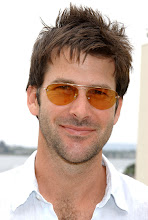
Pitchman Billy Mays Had Enlarged Heart
Popular product pusher Billy Mays had an enlarged heart and likely died over the weekend of a pulmonary embolism, or blocked artery, a medical examiner told reporters on Monday. There was no sign of head trauma. He was 50.
Dr. Vernard Adams told reporters that Mays' heart weighed 500 grams, or about 17.6 ounces. A typical male heart weighs about 10-12 ounces. The "heart disease that was found was certainly capable of causing the sudden death that he experienced."
Skip over this content
Billy's Pitchiest: From Quick Chop to Mighty Mend It
There was no indication of drug abuse, prescription or otherwise. Further test need to be made and the official ruling of cause of death won't be available for several weeks, Adams said.
Mays told his wife, Deborah, he didn't feel well when he went to bed Saturday night. In the morning she found the booming-voiced OxiClean pitchman unconscious. Earlier in the day, he said he was hit on the head when the airplane he was riding in had a rough landing at Tampa Bay's airport.
However, doctors found no evidence of head trauma during the autopsy.
The airline, U.S. Airways, said no passengers reported any serious injuries, and Mays himself cheerfully recounted the landing for a local TV station. The bumpy landing occurred because the plane blew its front tires.
Tampa police spokeswoman Laura McElroy said linking Mays' death to the landing would "purely be speculation." She said Mays' family members didn't report any health issues with the pitchman, but said he was due to have hip replacement surgery in coming weeks.
"Although Billy lived a public life, we don't anticipate making any public statements over the next couple of days. Our family asks that you respect our privacy during these difficult times," Deborah Mays says in a statement.
Police do not suspect any foul play.
Born William Mays in McKees Rocks, Pa., on July 20, 1958, Mays developed his style demonstrating knives, mops and other "As Seen on TV" gadgets on Atlantic City's boardwalk. For years he worked as a hired gun on the state fair and home show circuits, attracting crowds with his booming voice and genial manner.
AJ Khubani, founder and CEO of "As Seen on TV," said he first met Mays in the early 1990s when Mays was still pitching one of his early products, the Shammy absorbent cloth, at a trade fair. He said he most recently worked with Mays on the reality TV show 'Pitchmen' on the Discovery Channel, which follows Mays and Anthony Sullivan in their marketing jobs.
Monday, June 29, 2009

Sunday, June 28, 2009
Pitchman found dead at home
Police: TV pitchman Billy Mays found dead at home
TAMPA, Fla. – Billy Mays, the burly, bearded television pitchman known for his boisterous hawking of products such as Orange Glo and OxiClean, has died. He was 50.
Tampa police said Mays was found unresponsive by his wife Sunday morning. A fire rescue crew pronounced him dead at 7:45 a.m.
There were no signs of a break-in, and investigators do not suspect foul play, said Lt. Brian Dugan of the Tampa Police Department, who wouldn't answer any more questions about how Mays' body was found because of the ongoing investigation. The coroner's office expects to have an autopsy done by Monday afternoon.
"Although Billy lived a public life, we don't anticipate making any public statements over the next couple of days," said Mays' wife, Deborah. "Our family asks that you respect our privacy during these difficult times."
Tampa area media outlets reported that Mays was a passenger on a U.S. Airways flight that made a rough landing on Saturday afternoon at Tampa International Airport, apparently blowing its front tires in an incident that left debris on the runway.
Tampa Bay's Fox television affiliate interviewed Mays after the incident.
"All of a sudden as we hit you know it was just the hardest hit, all the things from the ceiling started dropping," MyFox Tampa Bay quoted him as saying. "It hit me on the head, but I got a hard head."
U.S. Airways officials said Sunday they could not immediately confirm that Mays was a passenger.
Born William Mays in McKees Rocks, Pa., on July 20, 1958, Mays developed his style demonstrating knives, mops and other "as seen on TV" gadgets on Atlantic City's boardwalk. For years he worked as a hired gun on the state fair and home show circuits, attracting crowds with his booming voice and genial manner.
After meeting Orange Glo International founder Max Appel at a home show in Pittsburgh in the mid-1990s, Mays was recruited to demonstrate the environmentally friendly line of cleaning products on the St. Petersburg-based Home Shopping Network.
Commercials and informercials followed, anchored by the high-energy Mays showing how it's done while tossing out kitschy phrases like, "Long live your laundry!"
Recently he's been seen on commercials for a wide variety of products and is featured on the reality TV show "Pitchmen" on the Discovery Channel, which follows Mays and Anthony Sullivan in their marketing jobs. He's also been seen in ESPN ads.
His ubiquitousness and thumbs-up, in-your-face pitches won Mays plenty of fans. People line up at his personal appearances for autographed color glossies, and strangers stop him in airports to chat about the products.
"I enjoy what I do," Mays told The Associated Press in a 2002 interview. "I think it shows."
Mays liked to tell the story of giving bottles of OxiClean to the 300 guests at his wedding, and doing his ad spiel ("powered by the air we breathe!") on the dance floor at the reception. Visitors to his house typically got bottles of cleaner and housekeeping tips.
Discovery Channel spokeswoman Elizabeth Hillman released a statement Sunday extending sympathy to the Mays family.
"Everyone that knows him was aware of his larger-than-life personality, generosity and warmth," Hillman's statement said. "Billy was a pioneer in his field and helped many people fulfill their dreams. He will be greatly missed as a loyal and compassionate friend."
Thursday, June 25, 2009
Two deaths in one day
'Angel' Farrah Fawcett
dies at 62
Spokesman: Fawcett died Thursday
morning
Updated: Thursday, 25 Jun 2009, 2:29 PM EDT
Published : Thursday, 25 Jun 2009, 12:49 PM EDT
• BOB THOMAS, Associated Press Writer
LOS ANGELES (AP) - Farrah Fawcett, the "Charlie's Angels" star whose feathered blond hair and dazzling smile made her one of the biggest sex symbols of the 1970s, died Thursday after battling cancer. She was 62.
The pop icon, who in the 1980s set aside the fantasy girl image to tackle serious roles, died shortly before 9:30 a.m. in a Santa Monica hospital, spokesman Paul Bloch said.
Ryan O'Neal, the longtime companion who had reunited with Fawcett as she fought anal cancer, was at her side, along with close friend Alana Stewart, Bloch said.
"After a long and brave battle with cancer, our beloved Farrah has passed away," O'Neal said. "Although this is an extremely difficult time for her family and friends, we take comfort in the beautiful times that we shared with Farrah over the years and the knowledge that her life brought joy to so many people around the world."
Other "Charlie's Angels" stars paid tribute to her.
"Farrah had courage, she had strength, and she had faith. And now she has peace as she rests with the real angels," Jaclyn Smith said.
Said Cheryl Ladd: "She was incredibly brave, and God will be welcoming her with open arms."
Fawcett burst on the scene in 1976 as one-third of the crime-fighting trio in TV's "Charlie's Angels." A poster of her in a clingy swimsuit sold in the millions.
Her full, layered hairstyle became all the rage, with girls and women across America adopting the look.
She left the show after one season but had a flop on the big screen with "Somebody Killed Her Husband." She turned to more serious roles in the 1980s and 1990s, winning praise playing an abused wife in "The Burning Bed."
She had been diagnosed with cancer in 2006. As she underwent treatment, she enlisted the help of O'Neal, who was the father of her now 24-year-old son, Redmond.
This month, O'Neal said he asked Fawcett to marry him and she agreed. They would wed "as soon as she can say yes," he said.
Her struggle with painful treatments and dispiriting setbacks was recorded in the television documentary "Farrah's Story." Fawcett sought cures in Germany as well as the United States, battling the disease with iron determination even as her body weakened.
"Her big message to people is don't give up, no matter what they say to you, keep fighting," her friend Stewart said. NBC estimated the May 15, 2009, broadcast drew nearly 9 million viewers.
In the documentary, Fawcett was seen shaving off most of her trademark locks before chemotherapy could claim them. Toward the end, she's seen huddled in bed, barely responding to a visit from her son.
Fawcett, Kate Jackson and Smith made up the original "Angels," the sexy, police-trained trio of martial arts experts who took their assignments from a rich, mysterious boss named Charlie (John Forsythe, who was never seen on camera but whose distinctive voice was heard on speaker phone.)
The program debuted in September 1976, the height of what some critics derisively referred to as television's "jiggle show" era, and it gave each of the actresses ample opportunity to show off their figures as they disguised themselves in bathing suits and as hookers and strippers to solve crimes.
Backed by a clever publicity campaign, Fawcett — then billed as Farrah Fawcett-Majors because of her marriage to "The Six Million Dollar Man" star Lee Majors — quickly became the most popular Angel of all.
Her face helped sell T-shirts, lunch boxes, shampoo, wigs and even a novelty plumbing device called Farrah's faucet. Her flowing blond hair, pearly white smile and trim, shapely body made her a favorite with male viewers in particular.
A poster of her in a dampened red swimsuit sold millions of copies and became a ubiquitous wall decoration in teenagers' rooms.
Thus the public and the show's producer, Spelling-Goldberg, were shocked when she announced after the series' first season that she was leaving television's No. 5-rated series to star in feature films. (Ladd became the new "Angel" on the series.)
But the movies turned out to be a platform where Fawcett was never able to duplicate her TV success. Her first star vehicle, the comedy-mystery "Somebody Killed Her Husband," flopped and Hollywood cynics cracked that it should have been titled "Somebody Killed Her Career."
The actress had also been in line to star in "Foul Play" for Columbia Pictures. But the studio opted for Goldie Hawn instead. "Spelling-Goldberg warned all the studios that that they would be sued for damages if they employed me," Fawcett told The Associated Press in 1979. "The studios wouldn't touch me."
She finally reached an agreement to appear in three episodes of "Charlie's Angels" a season, an experience she called "painful."
She returned to making movies, including the futuristic thriller "Logan's Run," the comedy-thriller "Sunburn" and the strange sci-fi tale "Saturn 3," but none clicked with the public.
Fawcett fared better with television movies such as "Murder in Texas," ''Poor Little Rich Girl" and especially as an abused wife in 1984's "The Burning Bed." The last earned her an Emmy nomination and the long-denied admission from critics that she really could act.
As further proof of her acting credentials, Fawcett appeared off-Broadway in "Extremities" as a woman who is raped in her own home. She repeated the role in the 1986 film version.
Not content to continue playing victims, she switched type. She played a murderous mother in the 1989 true-crime story "Small Sacrifices" and a tough lawyer on the trail of a thief in 1992's "Criminal Behavior."
She also starred in biographies of Nazi-hunter Beate Klarsfeld and photographer Margaret Bourke-White.
"I felt that I was doing a disservice to ourselves by portraying only women as victims," she commented in a 1992 interview.
In 1995, at age 50, Fawcett posed partly nude for Playboy magazine. The following year, she starred in a Playboy video, "All of Me," in which she was equally unclothed while she sculpted and painted.
She told an interviewer she considered the experience "a renaissance," adding, "I no longer feel ... restrictions emotionally, artistically, creatively or in my everyday life. I don't feel those borders anymore."
Fawcett's most unfortunate career moment may have been a 1997 appearance on David Letterman's show, when her disjointed, rambling answers led many to speculate that she was on drugs. She denied that, blaming her strange behavior on questionable advice from her mother to be playful and have a good time.
In September 2006, Fawcett, who at 59 still maintained a strict regimen of tennis and paddleball, began to feel strangely exhausted. She underwent two weeks of tests and was told the devastating news: She had anal cancer.
O'Neal, with whom she had a 17-year relationship, again became her constant companion, escorting her to the hospital for chemotherapy.
"She's so strong," the actor told a reporter. "I love her. I love her all over again."
She struggled to maintain her privacy, but a UCLA Medical Center employee pleaded guilty in late 2008 to violating federal medical privacy law for commercial purposes for selling records of Fawcett and other celebrities to the National Enquirer.
"It's much easier to go through something and deal with it without being under a microscope," she told the Los Angeles Times in an interview in which she also revealed that she helped set up a sting that led to the hospital worker's arrest.
Her decision to tell her own story through the NBC documentary was meant as an inspiration to others, friends said. The segments showing her cancer treatment, including a trip to Germany for procedures there, were originally shot for a personal, family record, they said. And although weak, she continued to show flashes of grit and good humor in the documentary.
"I do not want to die of this disease. So I say to God, 'It is seriously time for a miracle,'" she said at one point.
Born Feb. 2, 1947, in Corpus Christi, Texas, she was named Mary Farrah Leni Fawcett by her mother, who said she added the Farrah because it sounded good with Fawcett. She was less than a month old when she underwent surgery to remove a digestive tract tumor with which she was born.
After attending Roman Catholic grade school and W.B. Ray High School, Fawcett enrolled at the University of Texas at Austin. Fellow students voted her one of the 10 most beautiful people on the campus and her photos were eventually spotted by movie publicist David Mirisch, who suggested she pursue a film career. After overcoming her parents' objections, she agreed.
Soon she was appearing in such TV shows as "That Girl," ''The Flying Nun," ''I Dream of Jeannie" and "The Partridge Family."
Majors became both her boyfriend and her adviser on career matters, and they married in 1973. She dropped his last name from hers after they divorced in 1982.
By then she had already begun her long relationship with O'Neal. Both Redmond and Ryan O'Neal have grappled with drug and legal problems in recent years.
Michael Jackson dies of
cardiac arrest
Updated: Thursday, 25 Jun 2009, 7:01 PM EDT
Published : Thursday, 25 Jun 2009, 5:17 PM EDT
• By DERRIK J. LANG, Associated Press Writer
LOS ANGELES (AP) - Michael Jackson, the moonwalking former child star who became known the world over as the "King of Pop" before his life and career deteriorated in a freakish series of scandals, died Thursday, a person with knowledge of the situation told The Associated Press. He was 50.
The person said Jackson died in a Los Angeles hospital. The person was not authorized to speak publicly and requested anonymity.
The circumstances of his death were not immediately clear. Jackson was not breathing when Los Angeles Fire Department paramedics responded to a call at his Los Angeles home about 12:30 p.m., Capt. Steve Ruda told the Los Angeles Times. The paramedics performed CPR and took him to UCLA Medical Center, Ruda told the newspaper.
Jackson's death brought a tragic end to a long, bizarre, sometimes farcical decline from his peak in the 1980s, when he was popular music's premier all-around performer, a uniter of black and white music who shattered the race barrier on MTV, dominated the charts and dazzled even more on stage.
He was perhaps the most exciting performer of his generation, known for his feverish, crotch-grabbing dance moves, his high-pitched voice punctuated with squeals and titters. His single sequined glove and tight, military-style jacket were trademarks second only to his ever-changing, surgically altered appearance. Over the years, his skin became lighter and his nose narrower.
Friday, June 5, 2009
Carradine's Family Suspicious of Death
Carradine's Family Suspicious of Death
Posted Jun 5th 2009 10:10AM by TMZ Staff
David Carradine's family believes foul play was involved in the actor's death because they've been told he was found with his hands tied behind his back.
Earlier today, Thai police added to the mystery saying, "It is unclear whether [David] committed suicide or not or [whether] he died of suffocation or heart failure." Police say he could have died from an "accidental suffocation."
David's body was discovered in his Bangkok hotel room early Thursday morning -- police said there was rope wrapped around his neck and genitals.
Initially cops suspected suicide, but Carradine's close friends and family immediately refuted the claim -- saying David would never do that to himself. But cops say there's no evidence to suggest anyone was in the room at the time of David's death.
Now, suspicions of foul play are growing even stronger among family members who claim the hotel has been incredibly slow in turning over surveillance video to cops.
We've been told by the U.S. Embassy in Bangkok that David's body was shipped back to the States Friday evening (Thailand is 14 hours ahead of PST).
Thursday, June 4, 2009
Actor David Carradine found dead in Bangkok
By GRANT PECK, Associated Press Writer Grant Peck, Associated Press Writer – 2 hrs 3 mins ago
BANGKOK – Actor David Carradine, a born seeker and cult idol who broke through as the willing student called "grasshopper" in the 1970s TV series "Kung Fu" and decades later as leader of an assassin squad in "Kill Bill," was found dead Thursday in Thailand. Police said he appeared to have hanged himself.
The officer responsible for investigating the death, Teerapop Luanseng, said the 72-year-old actor was staying at a suite at the luxury Swissotel Nai Lert Park Hotel.
"I can confirm that we found his body, naked, hanging in the closet," Teerapop said. He said police suspected suicide.
A spokesman for the U.S. Embassy, Michael Turner, said the embassy was informed by Thai authorities that Carradine died either late Wednesday or early Thursday, but he could not provide further details out of consideration for his family.
Carradine came from an acting family. His father, John, made a career playing creepy, eccentric characters in film and on stage. His brothers Keith, Robert and Bruce also became actors. Actress Martha Plimpton is Keith Carradine's daughter.
"My Uncle David was a brilliantly talented, fiercely intelligent and generous man. He was the nexus of our family in so many ways, and drew us together over the years and kept us connected," Plimpton said Thursday.
Carradine was in Bangkok shooting the movie "Stretch," said his manager, Chuck Binder.
"We're very saddened, he was a wonderful guy," said Lori Binder, a partner in the agency that represented Carradine.
"It is shocking to me that he is no longer with us," said Michael Madsen, who played an assassin in "Kill Bill."
"I had been thinking about calling him for the last several days. ... I have so many great memories of David that I wouldn't even know where to begin . He has a very special place in my heart."
The Web site of the Thai newspaper The Nation said Carradine could not be contacted after he failed to appear for a meal with the rest of the film crew on Wednesday, and that his body was found by a hotel maid Thursday morning. It said a preliminary police investigation found that he had hanged himself with a cord used with the suite's curtains. It cited police as saying there was no sign that he had been assaulted.
Police said Carradine's body was taken to a hospital for an autopsy that would be done Friday.
Carradine appeared in more than 100 feature films with such directors as Martin Scorsese, Ingmar Bergman and Hal Ashby. One of his early film roles was as folk singer Woody Guthrie in Ashby's 1976 biopic, "Bound for Glory."
But he was best known for his role as Kwai Chang Caine, a Shaolin priest traveling the 1800s American frontier West in the TV series "Kung Fu," which aired in 1972-75.
"I wasn't like a TV star in those days, I was like a rock 'n' roll star," Carradine said in an interview with Associated Press Radio in 1996. "It was a phenomenon kind of thing. ... It was very special."
Actor Rainn Wilson, star of TV's "The Office," tweeted about Carradine's death on Twitter: "R.I.P. David Carradine. You were a true hero to so many of us children of the 70s. We'll miss you, Kwai Chang Caine."
Carradine reprised the role in a mid-1980s TV movie and played Caine's grandson in the 1990s syndicated series "Kung Fu: The Legend Continues."
He returned to the top in recent years as the title character in Quentin Tarantino's two-part saga "Kill Bill." Bill, the worldly father figure of a pack of crack assassins, was a shadowy presence in 2003's "Kill Bill — Vol. 1." In that film, one of Bill's former assassins (Uma Thurman) begins a vengeful rampage against her old associates, including Bill.
In "Kill Bill — Vol. 2," released in 2004, Thurman's character catches up to Bill. The role brought Carradine a Golden Globe nomination as best supporting actor.
Bill was a complete contrast to Caine, the soft-spoken refugee from a Shaolin monastery, serenely spreading wisdom and battling bad guys in the Old West. He left after three seasons, saying the show had started to repeat itself.
"David's always been kind of a seeker of knowledge and of wisdom in his own inimitable way," his brother, actor Keith Carradine, said in a 1995 interview.
After "Kung Fu," Carradine starred in the 1975 cult flick "Death Race 2000." He starred with Liv Ullmann in Bergman's "The Serpent's Egg" in 1977 and with his brothers in the 1980 Western "The Long Riders."
But after the early 1980s, he spent two decades doing mostly low-budget films. Tarantino's films changed that.
"All I've ever needed since I more or less retired from studio films a couple of decades ago ... is just to be in one," Carradine told The Associated Press in 2004.
"There isn't anything that Anthony Hopkins or Clint Eastwood or Sean Connery or any of those old guys are doing that I couldn't do," he said. "All that was ever required was somebody with Quentin's courage to take and put me in the spotlight."
One thing remained a constant after "Kung Fu": Carradine's interest in Asian herbs, exercise and philosophy. He wrote a personal memoir called "Spirit of Shaolin" and continued to make instructional videos on tai chi and other martial arts.
In the 2004 interview, Carradine talked candidly about his past boozing and narcotics use, but said he had put all that behind him and stuck to coffee and cigarettes.
"I didn't like the way I looked, for one thing. You're kind of out of control emotionally when you drink that much. I was quicker to anger."
"You're probably witnessing the last time I will ever answer those questions," Carradine said. "Because this is a regeneration. It is a renaissance. It is the start of a new career for me.
"It's time to do nothing but look forward."
___
Associated Press writer Polly Anderson in New York contributed to this report.
Tuesday, May 5, 2009
Dom DeLuise, Comic Actor, Dies at 75
Dom DeLuise, Comic Actor, Dies at 75
By WILLIAM GRIMES
Published: May 5, 2009
Dom DeLuise, a pudgy actor whose manic grin and air of desperation added comic bounce to films like “The Twelve Chairs,” “Blazing Saddles” and “Cannonball Run,” died Monday in Los Angeles. He was 75 and lived in Pacific Palisades.
The Associated Press reported that his son Michael had told a television and radio station in Los Angeles that his father had died after a long illness.
Mr. DeLuise first made his mark on television in the early 1960’s as Dominick the Great, an inept but determined magician trying desperately to maintain his poise as one trick after another failed. He created the character for “The Garry Moore Show” and brought it to the CBS variety series “The Entertainers,” where the ensemble cast included Bob Newhart and Carol Burnett, and “The Dean Martin Summer Show.”
Before long Mr. DeLuise was appearing in films, usually in broad comedies as a nervous sidekick, a schmo or a preposterous fraud.
He was a favorite of Mel Brooks, who cast him as the greedy Father Fyodor in “The Twelve Chairs” (1970), the director’s silly assistant in “Silent Movie” (1976), the Emperor Nero in “History of the World — Part I” (1981), the voice of Pizza the Hutt in “Spaceballs” (1987) and the Godfather-like Don Giovanni in “Robin Hood: Men in Tights” (1993).
Burt Reynolds, another fan, teamed up with Mr. DeLuise in several films, including “Smokey and the Bandit II” (1980), “Cannonball Run” (1981) and “The Best Little Whorehouse in Texas” (1982).
Dominick DeLuise was born in Brooklyn and, after graduating from the High School for Performing Arts in Manhattan, attended Tufts. He broke into show business in the late 1950’s in parts like Tinker the Toymaker in the daytime television show “Tinker’s Workshop.” (The show’s creator and first host, Bob Keeshan, had gone on to create and star in “Captain Kangaroo.”) He then made regular appearances on “The Shari Lewis Show” as a bumbling private eye.
After making his Broadway debut in 1963 as the cheerfully nervous mountebank Muffin T. Ragamuffin in “The Student Gypsy,” he appeared as a nervous flier in the cold-war thriller “Fail-Safe” (1964). This serious role was atypical. His chubby face and hysterical laugh made him a natural for comic roles, like the dimwitted spy in the Doris Day film “The Glass Bottom Boat” (1966). These parts he attacked over the ensuing decades with scene-stealing abandon.
Working with Mr. Reynolds and Mr. Brooks, Mr. DeLuise went on a tear in the 1970s and early 1980s. Gene Wilder cast him as a hammy opera star in “The Adventure of Sherlock Holmes’ Smarter Brother” (1975) and as the mad studio chief Adolf Zitz in “The World’s Greatest Lover” (1977). He made a cameo appearance as a wild-eyed agent in “The Muppet Movie” (1979), took on a tragicomic role as a compulsive eater in “Fatso” (1980), and directed his first film, “Hot Stuff” (1979), in which he also took a starring role opposite Suzanne Pleshette.
Mr. DeLuise’s performances, never marked by restraint, stuck at fortissimo as time went on. Films like “Loose Cannons” (1990), in which he played the obese pornographer Harry (the Hippo) Gutterman, did him no favors, and he reached a nadir in “The Silence of the Hams” (1994), a horror spoof, in which he played Dr. Animal Cannibal Pizza.
As his film career declined, Mr. DeLuise found a creative outlet in food. A talented amateur chef, he began doing cooking demonstrations on television and wrote several cookbooks, including, “Eat This . . . It’ll Make You Feel Better!” (1988) and “Eat This Too!: It’ll Also Make You Feel Better” (1997). He also wrote “Charlie the Caterpillar,” “The Pouch Potato” and other books for children.
In 1965 he married the actress Carol Arthur, who survives him. In addition to his son Michael, he is survived by two other sons. Peter and David, and three grandchildren.
His toughest acting assignment was his first, he told the writer Ronald L. Smith in 1992 for the book “Who’s Who in Comedy.” He was handed the role of a penny in a school play. “The part called for me to roll under a bed as soon as the curtain went up and stay there until I was found in the very last scene,” he said. “It was my hardest role to date. I detested having to be quiet and out of the action for so long.”
Saturday, April 25, 2009
'Golden Girls' star Bea Arthur dies at 86
'Golden Girls' star Bea Arthur dies at 86
April 25, 2009, 2:55 PM EST
LOS ANGELES (AP) -- Beatrice Arthur, the tall, deep-voiced actress whose razor-sharp delivery of comedy lines made her a TV star in the hit shows "Maude" and "The Golden Girls" and who won a Tony Award for the musical "Mame," died Saturday. She was 86.
Arthur died peacefully at her Los Angeles home with her family at her side, family spokesman Dan Watt said. She had cancer, Watt said, declining to give further details.
"She was a brilliant and witty woman," said Watt, who was Arthur's personal assistant for six years. "Bea will always have a special place in my heart."
Arthur first appeared in the landmark comedy series "All in the Family" as Edith Bunker's loudly outspoken, liberal cousin, Maude Finley. She proved a perfect foil for blue-collar bigot Archie Bunker (Carroll O'Connor), and their blistering exchanges were so entertaining that producer Norman Lear fashioned Arthur's own series.
In a 2008 interview with The Associated Press, Arthur said she was lucky to be discovered by TV after a long stage career, recalling with bemusement CBS executives asking about the new "girl."
"I was already 50 years old. I had done so much off-Broadway, on Broadway, but they said, 'Who is that girl? Let's give her her own series,'" Arthur said.
"Maude" scored with television viewers immediately on its CBS debut in September 1972, and Arthur won an Emmy Award for the role in 1977.
The comedy flowed from Maude's efforts to cast off the traditional restraints that women faced, but the series often had a serious base. Her husband Walter (Bill Macy) became an alcoholic, and she underwent an abortion, which drew a torrent of viewer protests. Maude became a standard bearer for the growing feminist movement in America.
The ratings of "Maude" in the early years approached those of its parent, "All in the Family," but by 1977 the audience started to dwindle. A major format change was planned, but in early 1978 Arthur announced she was quitting the show.
"It's been absolutely glorious; I've loved every minute of it," she said. "But it's been six years, and I think it's time to leave."
"Golden Girls" (1985-1992) was another groundbreaking comedy, finding surprising success in a television market increasingly skewed toward a younger, product-buying audience.
The series concerned three retirees — Arthur, Betty White and Rue McClanahan — and the mother of Arthur's character, Estelle Getty, who lived together in a Miami apartment. In contrast to the violent "Miami Vice," the comedy was nicknamed "Miami Nice."
As Dorothy Zbornak, Arthur seemed as caustic and domineering as Maude. She was unconcerned about the similarity of the two roles. "Look — I'm 5-feet-9, I have a deep voice and I have a way with a line," she told an interviewer. "What can I do about it? I can't stay home waiting for something different. I think it's a total waste of energy worrying about typecasting."
The interplay among the four women and their relations with men fueled the comedy, and the show amassed a big audience and 10 Emmys, including two as best comedy series and individual awards for each of the stars.
In 1992, Arthur announced she was leaving "Golden Girls." The three other stars returned in "The Golden Palace," but it lasted only one season.
Arthur was born Bernice Frankel in New York City in 1922. When she was 11, her family moved to Cambridge, Md., where her father opened a clothing store. At 12 she had grown to full height, and she dreamed of being a petite blond movie star like June Allyson. There was one advantage of being tall and deep-voiced: She was chosen for the male roles in school plays.
Bernice — she hated the name and adopted her mother's nickname of Bea — overcame shyness about her size by winning over her classmates with wisecracks. She was elected the wittiest girl in her class. After two years at a junior college in Virginia, she earned a degree as a medical lab technician, but she "loathed" doing lab work at a hospital.
Acting held more appeal, and she enrolled in a drama course at the New School of Social Research in New York City. To support herself, she sang in a night spot that required her to push drinks on customers.
During this time she had a brief marriage that provided her stage name of Beatrice Arthur. In 1950, she married again, to Broadway actor and future Tony-winning director Gene Saks.
After a few years in off-Broadway and stock company plays and television dramas, Arthur's career gathered momentum with her role as Lucy Brown in the 1955 production of "The Threepenny Opera."
In 2008, when Arthur was inducted in the TV Academy Hall of Fame, Arthur pointed to the role as the highlight of her long career.
"A lot of that had to do with the fact that I felt, 'Ah, yes, I belong here,'" Arthur said.
More plays and musicals followed, and she also sang in nightclubs and played small roles in TV comedy shows.
Then, in 1964, Harold Prince cast her as Yente the Matchmaker in the original company of "Fiddler on the Roof."
Arthur's biggest Broadway triumph came in 1966 as Vera Charles, Angela Lansbury's acerbic friend in the musical "Mame," directed by Saks. Richard Watts of the New York Post called her performance "a portrait in acid of a savagely witty, cynical and serpent-tongued woman."
She won the Tony as best supporting actress and repeated the role in the unsuccessful film version that also was directed by Saks, starring Lucille Ball as Mame. Arthur would play a variation of Vera Charles in "Maude" and "The Golden Girls."
In 1983, Arthur attempted another series, "Amanda's," an Americanized version of John Cleese's hilarious "Fawlty Towers." She was cast as owner of a small seaside hotel with a staff of eccentrics. It lasted a mere nine episodes.
Between series, Arthur remained active in films and theater. Among the movies: "That Kind of Woman" (1959), "Lovers and Other Strangers" (1970), Mel Brooks ' "The History of the World: Part I" (1981), "For Better or Worse" (1995).
The plays included Woody Allen's "The Floating Light Bulb" and "The Bermuda Avenue Triangle," written by and costarring Renee Taylor and Joseph Bologna. During 2001 and 2002 she toured the country in a one-woman show of songs and stories, "... And Then There's Bea."
Arthur and Saks divorced in 1978 after 28 years. They had two sons, Matthew and Daniel. In his long career, Saks won Tonys for "I Love My Wife," "Brighton Beach Memoirs" and "Biloxi Blues." One of his Tony nominations was for "Mame."
In 1999, Arthur told an interviewer of the three influences in her career: "Sid Caesar taught me the outrageous; (method acting guru) Lee Strasberg taught me what I call reality; and ('Threepenny Opera' star) Lotte Lenya, whom I adored, taught me economy."
In recent years, Arthur made guest appearances on shows including "Curb Your Enthusiasm" and "Malcolm in the Middle." She was chairwoman of the Art Attack Foundation, a non-profit performing arts scholarship organization.
Arthur is survived by her sons and two granddaughters. No funeral services are planned.
Subscribe to:
Posts (Atom)